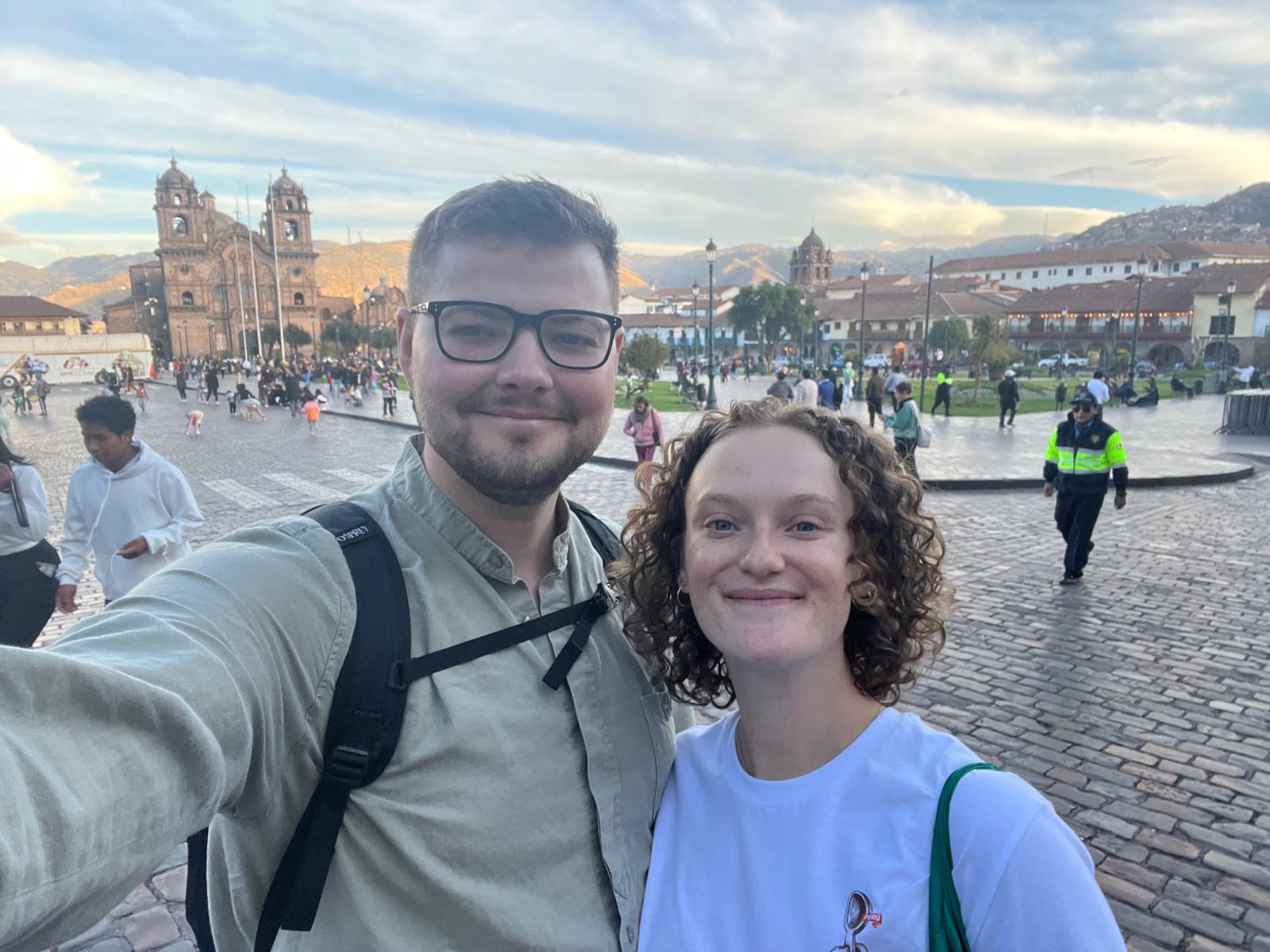
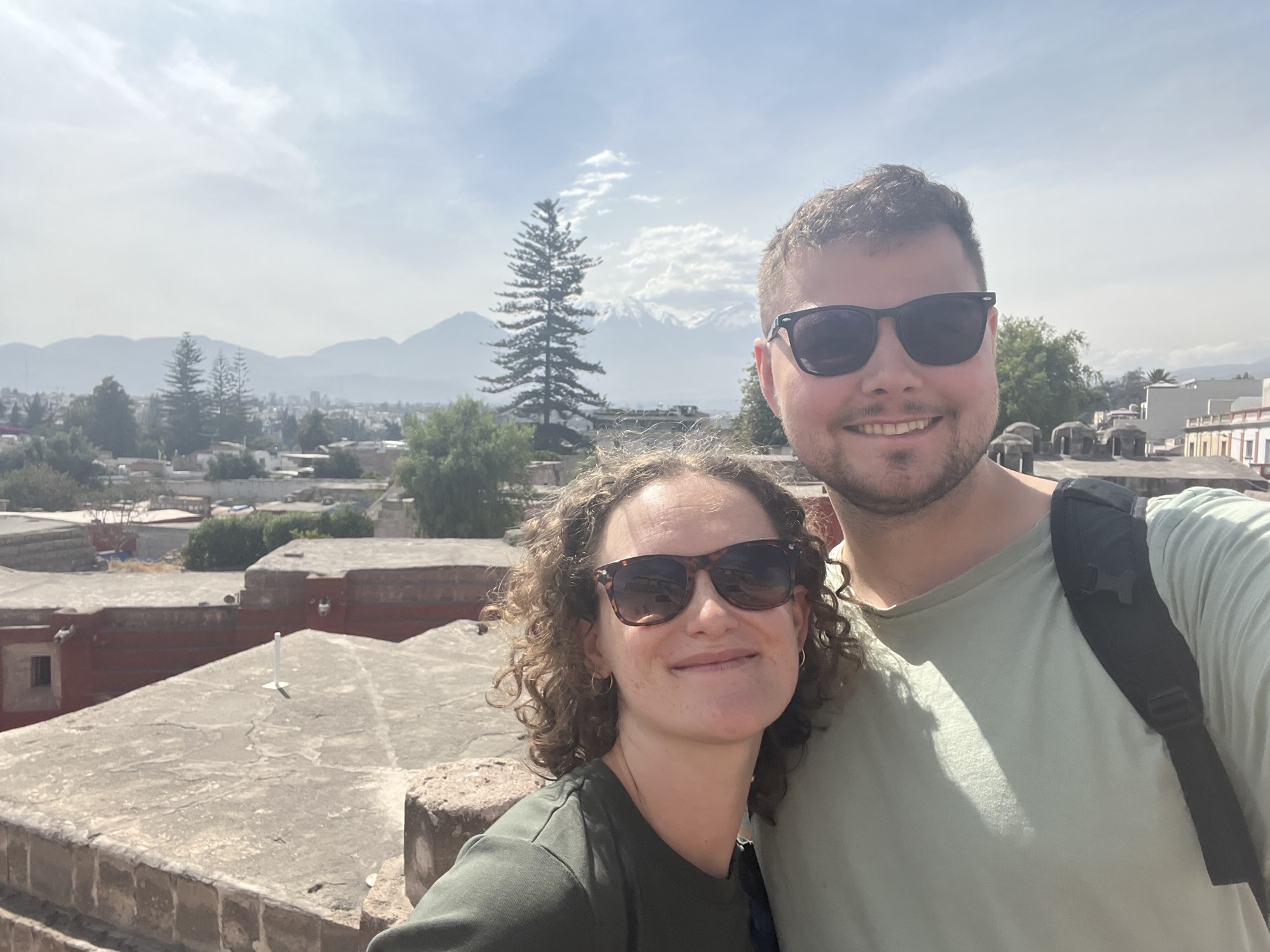
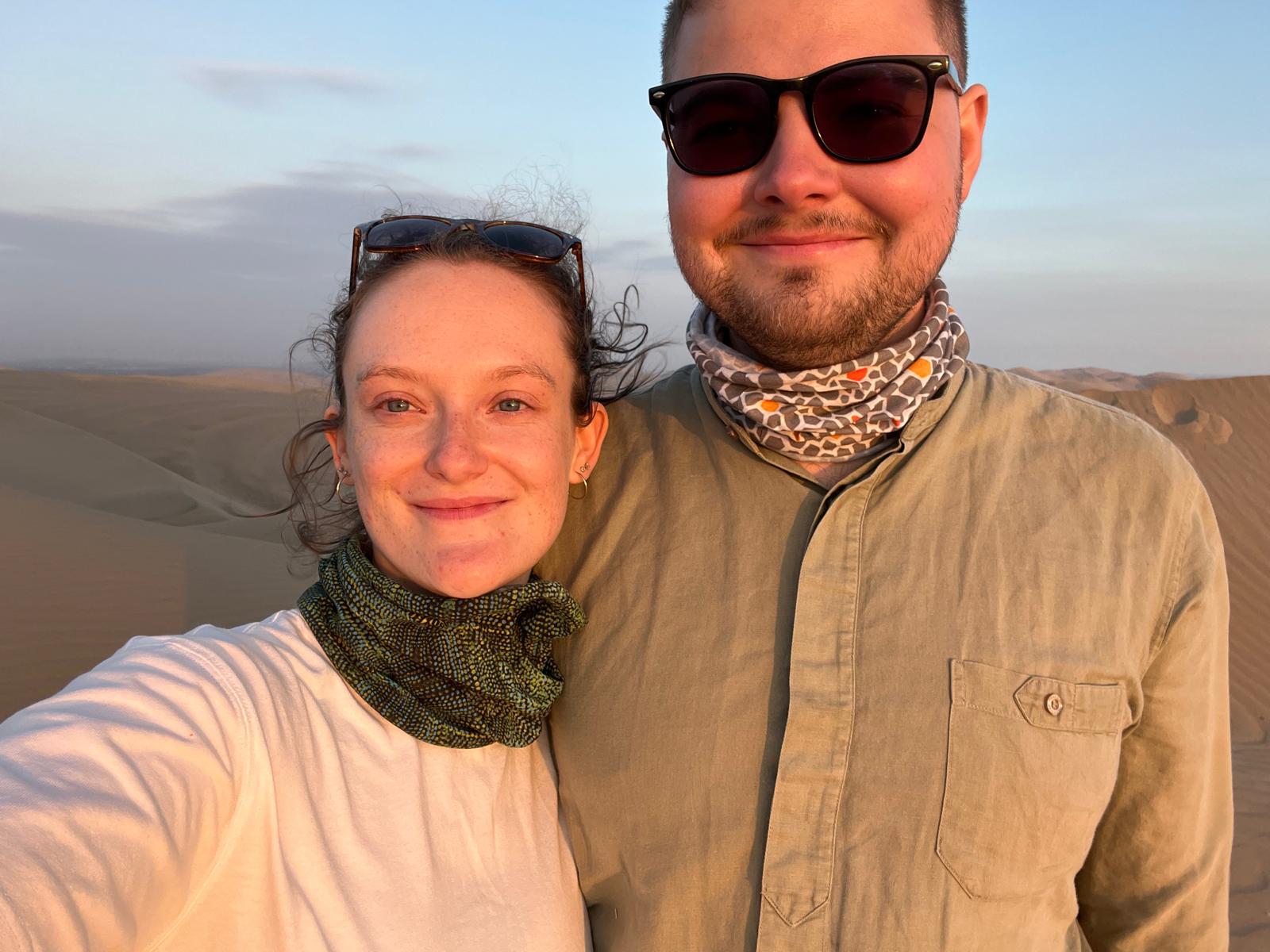
Sucre is the second city we’ve visited with the nickname ‘The White City’, the other being Arequipa in Peru. The white buildings of the historic centre are of course the main similarity, but the European-style feel and obvious (historical) wealth are also shared across the two cities. It’s therefore a very comfortable and relaxing place to spend time, especially after the chaos of La Paz!
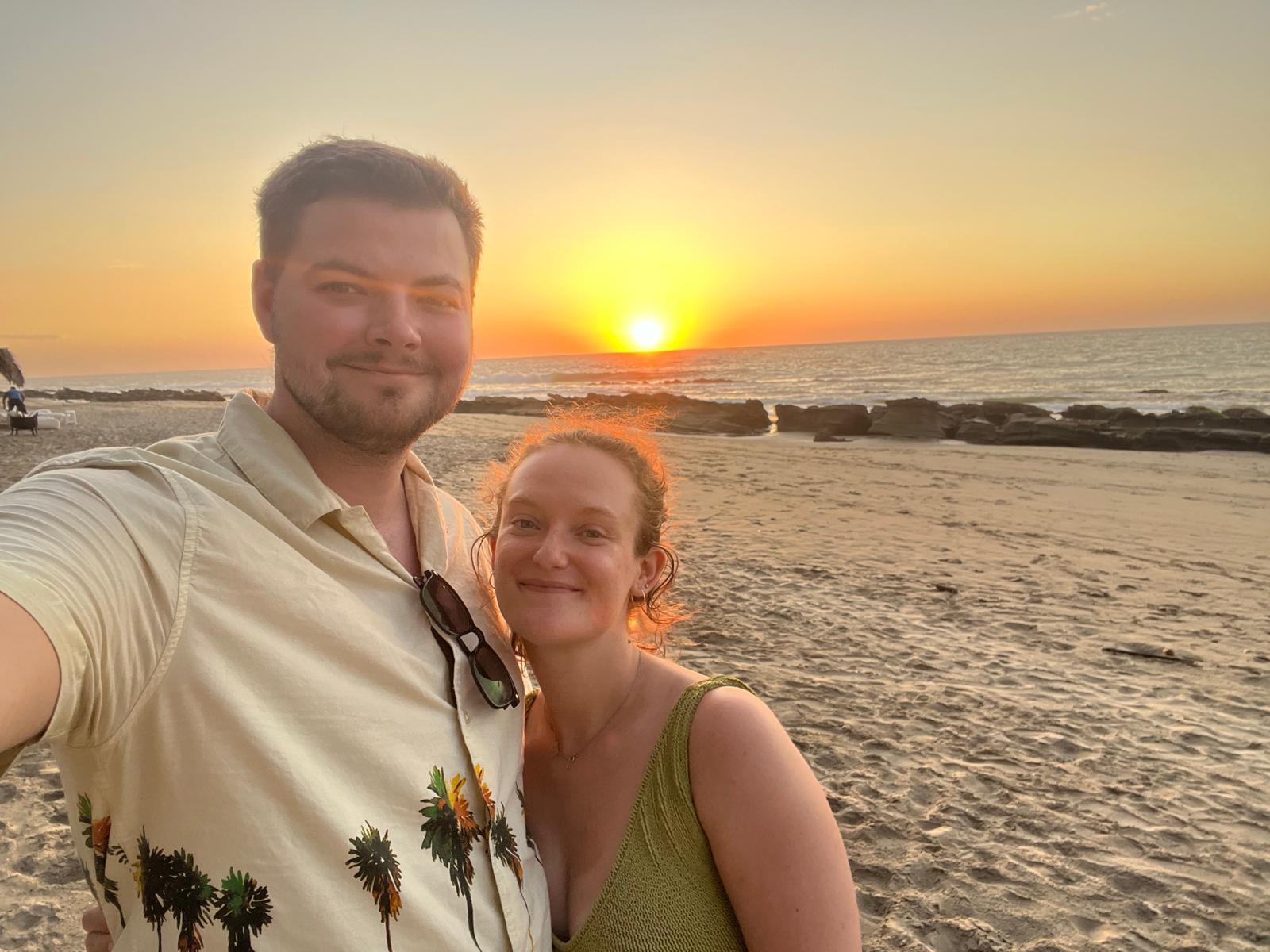
The main square is lovely, and a walking tour showed us the highlights, ending with a fantastic sunset view from La Recoleta. We enjoyed some fantastic gelato on the square, coffee up an old church tower, and a (sort of) mini Eiffel Tower.
Weather:
Perfect! Great mid 20’s and clear skies. Cool evenings and warm days. No signs yet of the Bolivian winter!
Where we stayed:
A traveler’s hostel run by an Australian called Robbie or Ollie (jury’s still out on what he said). We booked out a 4 bed dorm for the 3 of us, which worked really well – our 4th guest naturally being a pile of bags and clothes on the spare bed.
An in-progress muralStill touching things!
Best thing we ate:
Sucre has lots of good food on offer, and we sampled a little variety. Shout outs to Keiseki (Japanese), La Taverne (French) and Bienmesabe (Venezuelan).
However the top spot goes to Tierra, an exceedingly cute veggie/pesci place. The waiter was a real foodie who delighted in explaining the different dishes, the regional origins of the ingredients, and the notes in the wine.
Coolest thing we did:
Sucre had two fantastic guided museum visits on offer: the Treasure Museum and the Para Ti Chocolate factory tour.
Having been past many gold & silver museums across the continent (and not going in any yet), we imagined the treasure museum would be the same sort of thing. We quickly discovered it was much more, showing us the full range of metals, gems and precious stones mined in the country. The guide turned off the lights to show us the incredibly well-presented lit up cabinets of geodes, crystals, and gems. The Bolivianite gems were stunning.
The chocolate factory was great too, showing us the full process from harvesting wild cacao pods, demonstrating the machinery, and controlling ratios for dark, milk and white chocolate. Our guide Wonka Bryan presented it all very well. Of course at the end we tasted some – delicious!
Bonus:
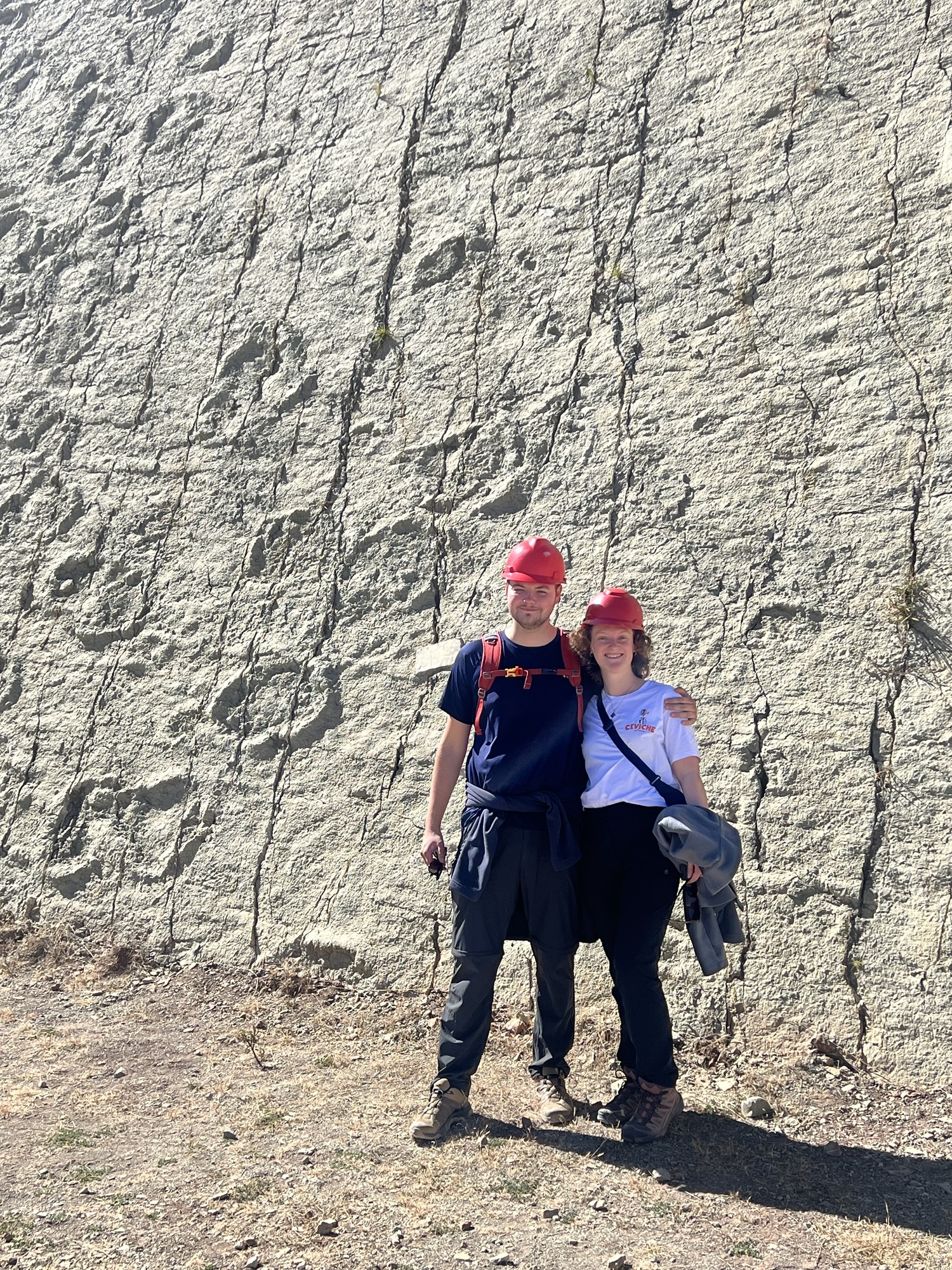
Not previously on my bucket list but fun to discover – the largest collection of dinosaur footprints in the world! The Cal Orck’o fossil bed, raised vertically by tectonic plates, shows over 12,000 footprints from a range of dinosaurs, and viewing them up close drives home how big dinosaurs were! At the other end of the size spectrum, our guide’s toy dinosaurs were a fun addition.
Bonus bonus:
Sunday saw us take a local colectivo bus to the nearby town of Tarabuco, for the Sunday market. This market is well-known as a central point for artisans in the region to exhibit and sell their handwoven textiles. After a fairly early arrival and hearty breakfast, we explored the market – through the standard market areas of clothes, homewares, flip flops made from recycled tyres and food – until finally reaching the textiles section. Between us we bought a good few items, from modern place mats to antique rugs!
Our last adventure is a tour of the salt flats in Uyuni… stay tuned for another belated post!
La Paz was the base for our time in Bolivia, with road blockades making travel a bit uncertain, we decided to fly between La Paz and our other destinations, and it is also where we will fly home from, so we’ve spent a good bit of time here! Contrary to what you might think, it’s not the official capital of Bolivia: it is the legislative and executive capital, but Sucre is the judicial and constitutional capital, meaning La Paz can’t claim to be the highest capital city in the world!
It is a crazy city that felt a bit like hard work. We’d been warned already by a French couple: ‘c’est dur’. This is largely because of the hills combined with the altitude, making it a workout to walk basically anywhere. In our case, it was made harder by some illness and an unfortunate pickpocketing!
That being said, we had a great walking tour around the city and learned more about its history and current struggles with the upcoming election. We saw an incredible cemetery, where the maximum tenancy is 5 years due to sheer popularity and lack of space. There is a mass of pigeons in the main square and crazy collections of wires everywhere, as well as some very pretty tourist market streets, if you’re able to ignore the dead baby llamas that are sold in the witches market…
There are 36 different native communities in Bolivia and La Paz is predominantly Aymara, different to the Quechua communities we had become more familiar with in Peru. Winter solstice (21st June) is the Aymara new year and people flock to the ancient ruins of Tiwanaku, which we visited – though not on the 21st!
The pigeons!The wires!The cemetery plots aren’t in the ground
Weather:
So much warmer than expected! We were prepared for cold because the weather forecast said cold, but it was definitely not cold by British standards.
Where we stayed:
In a couple of very nice apartments, one before my sister Zoë joined and another one for after. Both in the Sopacachi neighbourhood which was slightly out of town and a nice, chill area with a good supermarket.
We also had a brief stint in Onkel’s Inn at the airport between flights, which was tiny and hot and noisy, but did the job.
Best thing we ate:
The star of the show was unsurprisingly a restaurant that is widely recognised as Bolivia’s best: Gustu. It is just out of town in a posher suburb, a fun cable car ride away. We were promised an eight-course tasting menu, made entirely of Bolivian ingredients and boy did it deliver. We each had a slightly different series of dishes (GF, pesci, ‘normal’) and Chris got the drinks pairing to go with. The waiters were all so lovely and gave us descriptions of each dish, where the ingredients came from and even advice on how to eat it for the best experience. And all this for just £28 a head!
On our return journey, we also had some great food at Popular Cocina and Ali Pacha, the latter being a vegan restaurant by a chef who trained at Gustu.
Potato five ways!Lemon lemon lemon
Coolest thing we did:
From the city we did a couple of day trips, one to the Valley of the Moon – not to be confused with the much bigger one in Chile – and Tiwanaku, a large pre-Inca site.
The first was probably my favourite, with the muddy sandstone having eroded into stalagmites that make for an eerie and super cool landscape. Tiwanaku, after having been spoilt for ruins in Cusco, was still impressive, but I fear I might be at my limit with old rocks. The structures here were likely the oldest we’ve seen this trip, many being over 1000 years old.
Can’t stop touching things
Bonus:
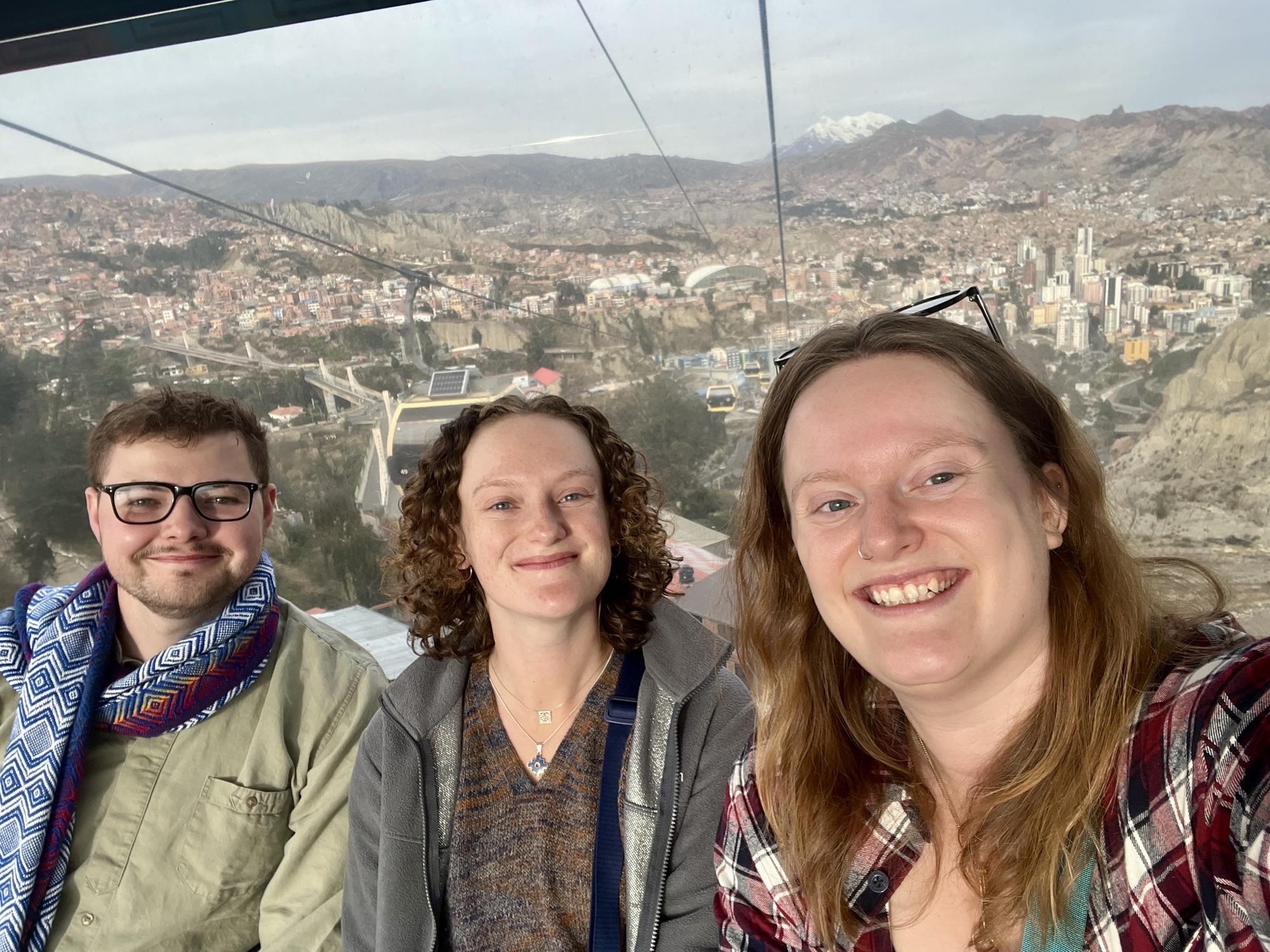
Getting a cable car around as public transport! La Paz has the largest cable car network in the world (10 lines) which is well-suited to its landscape. Chris was conveniently able to get the Teleferico home from his exciting trip to the police station – reporting the phone pickpocketing he suffered. For once travel insurance will pay off!
From La Paz, we fly to Sucre so follow along as we try to finish our posts before we land in London..!
Hello Bolivia! After a bit of recovery from our trek, we decided to skip the Peruvian side of Lake Titicaca and go straight to Bolivia. Our bus ended up changing in Puno anyway, so we did catch a glimpse of the sunrise on the lake before we reached Copacabana.
We had a bite to eat and a walk around the small town, and then got a boat over to Isla del Sol where we stayed for three nights.
As part of the ongoing economic and political crisis in Bolivia, their currency (the Boliviano) is not worth very much. If you can bring dollars into the country, you can have a lot of fun going around money changers on the street trying to find the best rate. The official rate is 1$ to 6.9 BOB, but on the ground you can get 16 BOB for 1$. The crisper, cleaner and higher value your dollar bills are, the better rate you get too.
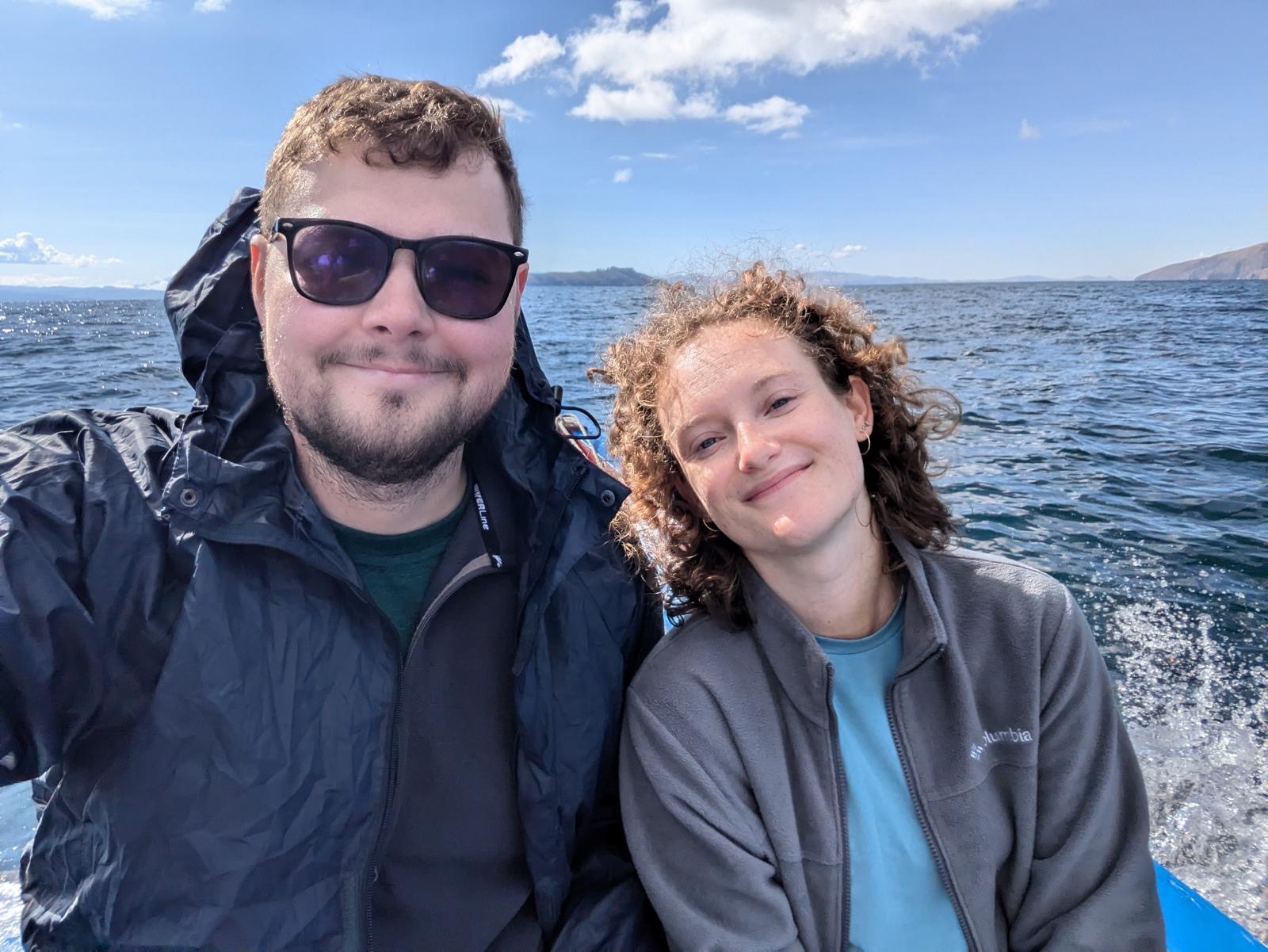
Lake Titicaca is home to the Incas and Isla del Sol is a sacred island, next to its counterpart the Isla de la Luna. The islands are very sparsely populated, making them really quiet and peaceful – perfect for relaxing and taking in the views. We enjoyed our time here, taking it easy, walking, and breathing the fresh air.
Sunrise from Puno bus station over the lakeCrossing the border!
Weather:
Warm and dry, but rather cold at night! Sleeping with 4 blankets makes it easy to get tangled, but was necessary in this case.
Where we stayed:
We stayed at a very cute family-run hostel, in the community of Yumani. This was probably the cleanest and prettiest room we’ve stayed in, with our window giving a fantastic view of the lake and mountains.
Best thing we ate:
Well, the only thing we ate was trout….which aren’t even native to Lake Titicaca! Nonetheless, after their introduction in the 20th century the lake is full of it, and tasty ones too. Las Velas restaurant offered a candlelit trout dinner, along with warming Bolivian mulled wine (with Singani).
Coolest thing we did:
A ‘private’ boat tour (with extra American tourist apparently included), took us first of all to the Isla de La Luna. Here we saw a pre-Incan Moon Temple, which was half restored to show how it would have looked originally. While smaller than some of the Incan sites we’ve seen in Peru, this was impressive by its much older age and remote location.
A long stretch of boat ride then took us to the north of the Isla de La Luna. After a steep climb, we enjoyed stunning views of the lake as we hiked along the ridge-top path. As well the Chincana ruins and a sacred rock, we saw a ceremonial table / altar, possibly used for human sacrifices!
Lunch in Challapampa, a fishing village, consisted of….trout, and was fairly tasty. We then got our swimmers on and ventured into the lake. For me this was just a paddle, but Florence went for a full swim – only a few thousand metres higher than her normal spot in Hampstead!
A couple of hours more hiking brought us back to the Yumani community, and we opted for dinner at the hostel, not wanting to climb any more hills to the restaurants!
Chris touching things again
Bonus:
Our bus company to La Paz got in touch to let us know the bus was cancelled due to road blockades, and that no alternative buses were running. We thought the dreaded Bolivian blockades (a popular form of political protest here) had arrived to interrupt our plans.
This was very frustrating, but we decided to have a positive mindset, get the boat back to the mainland, then search the whole town for any bus, minibus, taxi or otherwise that would be willing to take us to La Paz, one way or another.
To our delight and surprise, we had barely stepped off the boat before we had multiple women shouting ‘LA PAAAAAZ LA PAZ’ at us.
40 bolivianos later and we were on our way – no idea why the original one cancelled!
I’ve seen trains on boats in Sicily, but this was new!
It has felt like the whole trip has led up to this point! The big 5 day 5 night trek to Machu Picchu.
We started out at the briefing in Cusco at our tour guide office, where we met most of our group and tried to work out what we’d be putting in each bag.
Day 0
We learned at the briefing that instead of being driven directly to our accommodation on day zero of the trek, we’d need to set off a bit earlier and walk the last 20 mins due to what was a pretty destructive landslide. The drive foreshadowed our rocky journey ahead, when 5 minutes in we had to stop to change a flat tyre…
Nevertheless we arrived at the glass cabins, our first night of accommodation, and soon had happy hour (tea time) then dinner. We had an early start the next morning (4.30am) so we were soon to bed for a little bit of stargazing through the glass roof and then sleep!
Day 1
The first day of walking was set to be the hardest, with a lot of distance, the highest altitude and some chunky hills.
We were woken up with coca tea at 4.30am and quickly bundled ourselves together for a hearty breakfast before beginning our walk. The sun soon came up and we were building up a sweat in our many layers as we climbed up to Humantay Lagoon. The lake was as stunning as promised and, not to brag, but we were the first ones there. So, with the lake to ourselves we watched the sun come over it and it turned a bright turqoise. After lots of photos and some snacks, we set off back down the mountain.
Once we were back down it became clear that there was a little problem, because our break was much longer than expected and there was a lot of walkie talkie action… It turns out the horsemen that were due to carry lots of stuff didn’t show up and so we couldn’t walk too far, because they needed to be ahead of us to set up lunch, and later dinner and the tents! This led to an early stop for lunch and quite a bit of waiting around, which at the time was frustrating, but gave us lots of time to bond as a group, and even with the private tour group who were on the same itinerary.
This little hiccup also meant we had to end our day’s walking a bit early and camp in a spot that neither of our guides had camped in before! This was 4480m high and pretty damn cold. Fortunately, we had tea time, hot food, and even hot water bottles to see us through the night. While it wasn’t the plan, it was pretty cool to camp so high up and right next to Salkantay mountain (but still somehow 2000m short of the summit!). With thermals, hats, hand warmers, and hot water bottles, we didn’t even get too cold. The portaloo was even quite nice too!
Day 2
We started day 2 ever so slightly later, with our coca tea wake up at 5am. This meant we saw it gradually get lighter around the mountain, and by the time we’d had breakfast the sun was out.
The highlight of this day was reaching Salkantay Pass, which is in between Salkantay and Humantay mountains. We reached this less than an hour into walking, as we were due to do it the previous day. On the way we saw wild chinchillas darting across the rocks, and once we arrived at the pass we did a ritual offering to the mountain. This is because the mountains were considered gods (‘apu’) to the Incas, in part because they deliver water through the glaciers which is of course an essential resource. It’s therefore the done thing to leave an offering (in our case three coca leaves), and make a wish for each of them, and thank Apu Salkantay.
What followed this high point was a long and rocky descent, dodging horses and trying to stay dry in what ended up being persistent rain. Cue the bright green ponchos.
Due to our slight delay, the day ended with a bus so that we could catch up and get to our accommodation before nightfall. While some stubborn people (men (Chris)) considered walking the remaining distance (another 10k), the prospect of hot showers and a jacuzzi at the hobbit houses was enough to encourage them onto the bus.
Day 3
The next day we had an even longer lie in and it felt good to be back on track. There wasn’t too much walking to do today, in theory, so we could at least take the morning fairly easy. We had a nice walk along a road in the sunshine with some great views, Chris practiced his Quechua with our guide Pillco, and we stopped to play the frog game for a bit, which involved throwing coins at a golden frog.
We carried on our walk to a coffee farm, where we did a tour. We saw the whole process from picking the beans, removing the shells, roasting them and finally grounding them. Our host Paulina then made us a coffee, although it was with the beans we roasted (read: burnt) so perhaps wasn’t the best display of their coffee. That doesn’t however mean we’re not now carrying around a kilo of coffee beans with us…
We had our lunch before beginning a 3hr ascent in the hot sun. We had a welcome pause at a beautiful viewpoint, ate our snacks and carried on. The reward for this was arriving at a big flat campsite where we could see Machu Picchu in the distance, lit up by the sun. Finally our destination was within reach! A quick descent led us to the campsite where we were sleeping, with our tents set up opposite Machu Picchu. It called for one thing, and one thing only: a bottle of wine. It was disgustingly sweet, but we shared it round and toasted to almost completing something.
The usual tea time and dinner came around and then it was bed time, but fortunately a much warmer camping experience this time!
In our coffee bean colours A well-earned napSun on MP!
Day 4
This was the only day I woke up before our official ‘alarm’, in order to catch sunrise over Machu Picchu. We had our tea watching it get lighter and lighter, with Salkantay mountain looking especially pretty as the sun came to shine on it.
I then somehow ended up leading the pretty rocky descent most of the way down until our first rest point. Thanks to the walking poles I only had one major stumble! We ended up at the Inca Jacuzzi (the Urubamba river), where Chris and I were the brave two to get in and bathe in the refreshing cold glacier water.
We walked through Hidroelectrica and arrived at the infamous train tracks that we would walk along for the rest of the day.
Before carrying on, we had our final lunch which was absolutely the best, with mango ceviche, potato tuna rolls, chicken skewers and fried rice. It was at this point we said thank you and goodbye to the porters and chef, who were amazing throughout. I don’t know how they do it, although our guide Saul did tell me that people who live above 4000m are officially considered superhumans. The chef especially, Teo, was an older man who every day had to carry the full kitchen equipment (c.25kg) every day, the same distance as us, while also cooking three full meals. Needless to say they got a big thank you from us, and personally I hope Teo can retire asap.
The rest of the day was a fairly flat 10km along the train tracks, and I decided to lead the charge. We built up a good momentum and it felt SO good to be walking along, rather than up or down. Us northern Europeans felt much more at home.
At the other end of this walk was our hotel in Aguas Calientes, the main hub for getting to Machu Picchu. We had a ginormous bed, a hot shower, a lie down, and somewhat fresh clothes. A restaurant dinner provided pisco sours, ceviche and quinoto al pesto. We also received our (bright green) survivor t shirts, which we were instructed to bring with us the following day.
Instead of heading back to the hotel with everyone, Chris and I went into the square to get out some cash and accidentally picking up a dessert on the way home. We got back to the hotel, got a cup of tea to take up and then snapped our key in the lock… The lady reassured us that they could get us another room, but our passports were in there and we needed them for Machu Picchu – one final hurdle! After 15 mins or so the staff did gain entry and we were under strict instructions to not lock the door again.
We went for a quick dip!
Day 5
The big day! Our final early start at 5am started with breakfast and then a queue for the bus up to Machu Picchu. We had early entry tickets, so needed to make sure we got on an early bus. We are led to believe that these things get quite competitive, but we were with an expert company so to be honest it all felt pretty easy. A short and winding bus ride and we were there.
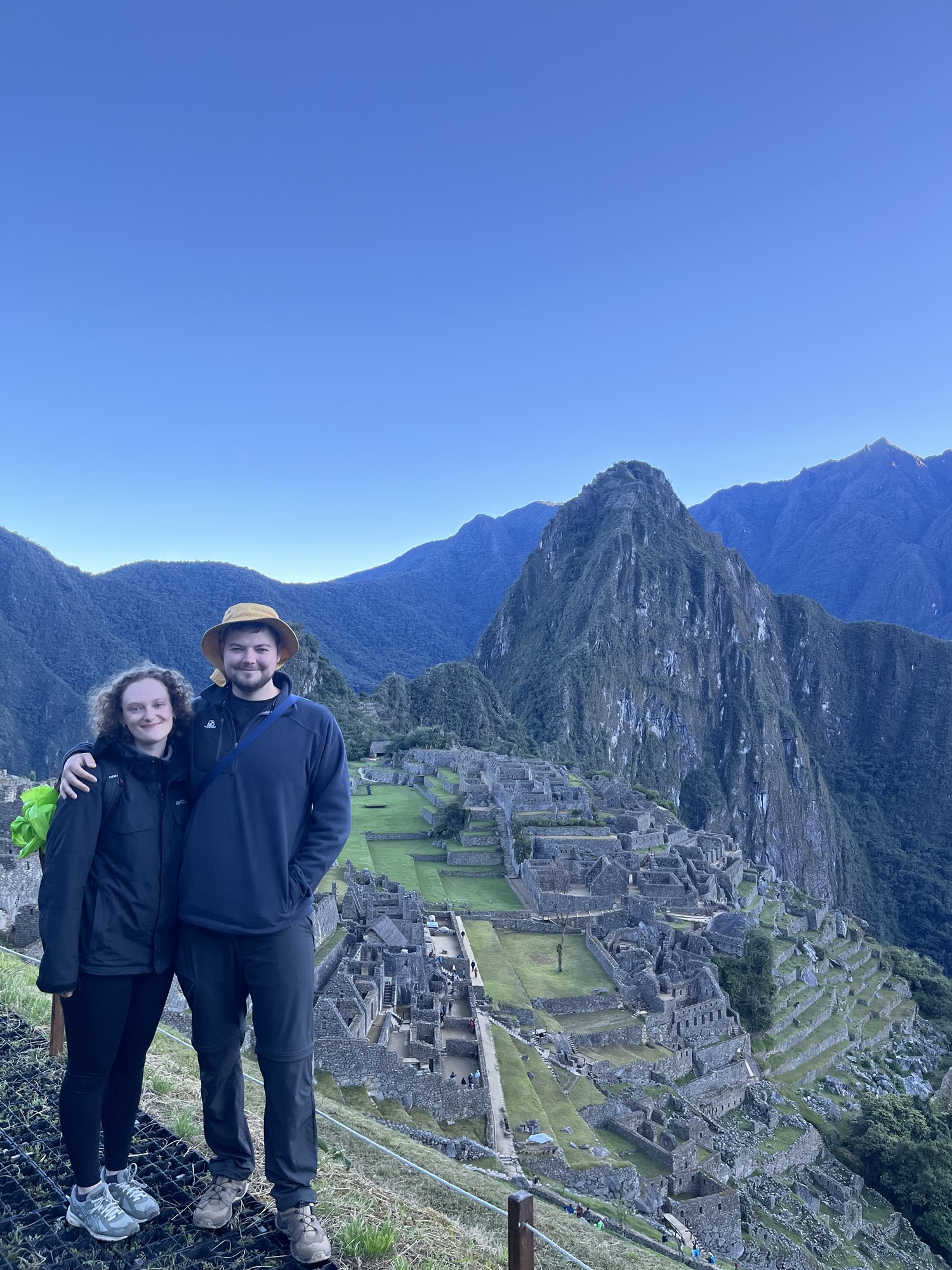
There are several different routes around Machu Picchu and we were on circuit 2, which gave a good view from above as well as the chance to walk amongst the ruins. The first focus was the view, and plenty of pictures to go with it! Within the first ten minutes there had already been one proposal and the second wasn’t far behind (don’t worry, not ours).
We then proceeded to have a tour around the ruins, leaning about its agricultural, urban and religious zones. The site would have been mainly for Inca royalty and the upper classes. About 25% of the site has been restored since its rediscovery in 1912. We saw the temple of the condor, an Andean cross, plenty of niches where offerings would have been made as well as altars for human sacrifice (complete with blood drainage channels). A highlight was also spotting the campsite from the previous night in the distance!
We have seen quite a lot of Inca ruins by now, but Machu Picchu is still so striking mainly because of its setting among the mountains. It is hard to comprehend how these (small) Incan people built a whole city there with no machinery to help them.
We then made our way back down to Aguas Calientes, had a walk around and a final lunch together before getting the train to Ollantaytambo. From here it was a bus ride to Cusco and time to say our goodbyes.
Doing the llama pose
R&R
After 70km on our feet, it was time for some rest and relaxation. Early on in our trip, Chris dramatically booked us into a 5 star hotel for the post-trek period. I can’t say I didn’t encourage him. He neglected to make sure that the hotel wasn’t up a giant hill, however!! We had a good couple of days rest, while also earning any dinner we got in town with a steep walk home.
Our neighboursThe hill!
This was our last stop in Peru, which has been a show stopping country!! Roll on Bolivia, where we hear civil unrest, roadblocks and protests are on the cards..!
Besos,
Florence & Chris
NB: you’ll be pleased to hear that all four ankles and feet are entirely in tact.
Cusco (or Qosqo), the centre of world according to the Incas. It was the capital of the Inca empire, and was originally laid out in the shape of a puma. It was also an important colonial city, and this varied history can be seen in many buildings – Spanish-style colonial buildings sitting on top of Inca foundations.
It’s a beautiful city to walk around, as well as having an absurdly high density of outdoor equipment shops, and massages being offered to you every 15 seconds as you walk along (presumably for tired trekkers).
We enjoyed a whole week here, making sure we were fully acclimatized to the altitude in anticipation of our trek to Machu Picchu on the Salkantay trail.
Weather:
Alternating days of sun and bits of rain – which made us a bit nervous for the weather on the trek. Mostly a good temperature though, being just a little cold in the evenings.
Best thing we ate:
We single-handedly propped up a small restaurant chain during our time in Cusco. Organika cafe was our mainstay, providing brunch, lunch, and afternoon sweet treats several times over. Its restaurant counterpart with the same name was also great after one of our long day trips, but the Rucola restaurant was extra nice with trout ceviche, 72-hour pork chicharron and good celebratory (post-trek) cocktails.
An honorable mention goes to Kusykay where Chris finally tried the infamous guinea pig – a popular Andean dish. We’ve seen many adorable (live) guinea pigs, but the cooked version is quite frightening, especially for a veggie/pesci. They cook the thing whole – teeth and all – and proudly present it to you for photos. This one came dressed in hat and blanket, just in case the oven hadn’t been warm enough. The waiter then kindly takes the plate away (brief relief) so they can chop it up into something more palatable. The teeth were still there, however. The meat was nothing unusual but quite bony and tricky to navigate, so maybe a one-off.
Ruins near Cusco:
Our Boleto Turistico included entrance to four Inca and pre-Inca sites north of Cusco: Saqsayhuaman, Q’enqo, Tambomachay, and Puka Pukara.
At Saqsayhuaman, famously pronounced close to ‘sexy woman’, we discovered an imposing and impressive Inca complex built on pre-Inca foundations. This important religious site overlooks Cusco, and large parts are built out of perfectly interlocking stones weighing up to 200 tonnes!
Among the other three sites we saw military constructions, more religious areas (including an altar used for human sacrifices), and impressive hydrological engineering at Tambomachay – ‘the Baths of the Inca”.
After stopping off for a snack (choclo con queso), we went to a couple of ‘bonus’ sites I’d read about online. The Templo de la Luna was another religious site on a small hill, which we did enjoy but it was raining a bit by then….
We also visited the mysteriously named ‘Zona X’. This took a bit of trial and error to find, but it was worth it to see the cool caves and walk through some little passages. We also stumbled upon some university students filming an ancient Inca ritual. They were keen to show us more caves and help them out with bloopers – we didn’t knowingly do anything funny, but maybe being gringos is enough!
The Sacred Valley:
As if we’d not seen enough Inca (and pre-Inca) ruins, we set off on a day trip to the Sacred Valley which is home to many interesting sites (not least Machu Picchu itself!). Our tour consisted of five main stops: Chinchero, Maras, Moray, Ollantaytambo and Pisac.
In Chinchero we saw some classic agricultural terraces, learned about dehydrated potatoes that can keep for 20 years, and were shown the traditional weaving process of alpaca wool, because Chinchero is also known for its weaving and textiles.
We then went on to Maras where we could see the incredible salt pools. A collection of 800 local families own the salt pools in partnership with the Peruvian government. The pools are all manually managed and function only in the dry season, when the salty springs fill the pools and then dry out leaving the salt. After seeing the pools, we went to a nearby shop where we could taste the salt in all its various flavours (smokey, chilli, pink). We may or may not now be carrying round lots of little bags of salt with us…
Moray was another display of agricultural terraces where we could see the larger, restored version and next to it a smaller, entirely original version. Lots of these ruins have similar vibes but I really liked this one for its concentric circles!
A quick stop for a buffet lunch in Urubamba was followed by Ollantaytambo, a really impressive terrace with a big sun temple. Then we had our final stop in Pisac, which was a huge Inca site that we only had time to explore part of. This was definitely the creepiest, given that the holes in the side of the mountain were the remnants of people’s tombs.
Rainbow Mountain and Red Valley:
Another day trip – this time with a 3.55am pick up… However this was well worth it to find ourselves, after a quick breakfast stop, hiking up above 5000m to see the stunning rainbow mountain – or Montaña de Siete Colores. We felt good hiking up at a decent pace, which was a nice confidence boost a few days before starting our 5-day trek. Nonetheless, the final steep stretch was a challenge, but with a fantastic view waiting at the top: not only of rainbow mountain, but also Apu Ausangate, the highest mountain in the Cusco region, and very sacred to the Incas.
After taking in the colours for a while, we descended the valley just to reascend on the other side to see the ‘Red Valley’ – which we can confirm is appropriately named! This was perhaps even more impressive than rainbow mountain by its vastness and contrast with the greenery.
Bonus:
Also included in our Boleto Turistico was a music and dance performance at the Qosqo Native Arts Centre. It was a fun hour of various dances and musical pieces, we were big fans of the (unexpected) whipping, the one where the men pretended the be drunk and the rain dance. We’ll let the video speak for itself!
Arequipa, the second biggest city in Peru, known as the White City. White for two reasons: because of the sillar stone used for the buildings, and/or because its colonial past gave it one of the whitest populations of Peru.
It’s a beautiful city, that feels pretty European aside from the three volcanoes that surround it. On our first day we joined a free walking tour, which ended in the main square at sunset. The main square is one of the most beautiful we’ve seen so far, with the cathedral taking up the entire width of one side. The tour also included a trip to Alpaca World (!) where we returned the next day to see the weavers at work and to make a purchase…
Chris touching things p.1Chris touching things p.2
One morning we took a tour of the monastery – confusingly, in Latin America, monasteries house nuns and convents house monks. It was like a whole little village! Once home to hundreds of nuns, it’s now almost entirely open to the public, save for the private area where the current 16 nuns live.
Weather:
Lovely and sunny, chilly at night.
Where we stayed:
A great hostel in the old town, in a surprisingly grand room with a high vaulted ceiling and a bath!!
Best thing we ate:
We had such a range of food in Arequipa! Our walking tour guide recommended places to get traditional dishes, so we tried rocoto relleno (stuffed spicy red peppers, veggie and alpaca meat versions) and chupe camarones (prawn soup). Both were very tasty!
There were also some good GF options in Gringas (mainly pizzas again), Crepisimo (don’t think I need to explain what they serve), and Tanta. The latter is a more affordable chain restaurant from Peruvian chef Gastón Acurio, where we went back several times.
Coolest thing we did:
While we had a great time exploring the city, our highlight was the day trip we took to Colca Canyon. We ummed and ahhed about whether to do this, mostly because of the 3.30am pick-up time, but we’re so glad we did!
The trip started so early because the Canyon is a good 3+ hour drive away and the best time to see the Andean condors that live there is between 8-10.30am. We made a quick stop at 6am to see sunrise over many surrounding volcanoes, then had breakfast, then made it to the Canyon. Colca Canyon is twice as deep as the Grand Canyon and is full of impressive farming terraces.
I went into the trip thinking it would be great to glimpse just one condor, not wanting to be disappointed, but it turns out I needn’t have worried. We started a short walk to the view point and almost instantly saw three in the distance. It then became absolutely ridiculous, with c.15 condors all flying around, above, and overhead. There was even one perched on a rock right by the view point. I never had myself down as a twitcher but it was staggering to see such huge creatures swooping around.
We made a quick stop to get a better look at the farming terraces (and wear traditional hats, of course). Then it was time for optional activities and we chose the most relaxed: aguas thermales. We had an hour to spend dipping in and out of the hot springs in Yanque before a much needed buffet lunch.
Bonus:
Buying my beautiful baby alpaca wool jumper 😍
We are just back from our trek to Machu Picchu so will be catching up on some posts!
Huacachina is a small oasis town in the Ica desert region. This desert is the northernmost part of the Atacama desert. Whilst largely a jumping off point for various activities, the town itself is really pretty, with the sand dunes above and the calm oasis in the centre.
Weather:
Hot hot hot!
Where we stayed:
We stayed at a nice simple hostel, although with all our activities we probably only spent about 7 hours there!
Sand boarding and buggy ride:
Our first activity, shortly after arriving, was a 2-hour ride across the huge sand dunes, stopping for sand boarding and to watch the sunset. I don’t know our driver’s name, only that his colleagues said we were with ‘El Loco’. Well, his driving certainly confirmed his loco status. We swerved round basins, leapt from sand dune ridges, and were thoroughly thrown from side to side in the back.
The sand boarding only left us with a few bruises here and there, but was well worth it for the exhilarating speed as you approach the bottom.
The sunset across this landscape was simply beautiful.
The guide made us do this…Florence says I need to work on my camera skills
Day trip to Paracas, Las Islas Ballestas, and Paracas National Reserve
This day trip started (after a minibus ride) with boating around some sparse and hostile looking islands, which were nonetheless home to some native flora and fauna, and economic activity.
There were huge colonies of various types of birds, sea spiders (basically crabs if you ask me), sea lions, and our favourite of all, penguins. Waddling warily by the rocky cliff face, the petite penguins were adorable. [F: Chris loves his alliteration…] All of these birds give rise to the local economy of collecting bird poo which is used as fertiliser.
Bad hair + windy day….
The afternoon saw us exploring the national reserve, driving along roads made of compacted salt, and taking in the fairly barren landscape. We had a refreshing swim in the perfectly cold water, enjoyed lunch at a different beach area with restaurants, and finally saw a reddish beach, due to iron oxide in the sand.
Bonus:
Just in case a 5.30am start to our day trip wasn’t early enough, the Nazca tectonic plate decided to wake us up in the night with a shake – by which I mean a magnitude 6 earthquake!* This was a little scary, but passed quite quickly.
*Earthquake of magnitude 6.0 with an epicentre 35 miles away. Some buildings were damaged at the epicentre but no injury or loss of life reported.
Next stop, Arequipa, also known as The White City.
We rearranged some of our plans to spend a bit longer in Lima, which meant a couple of long buses in a row to get there. Fortunately, one of these was a luxurious night bus where the seats felt like little beds – maybe more so for me, being the height of the average Peruvian man (we looked it up), than for Chris, being a little taller…
We spent a week in Lima using it as an opportunity to rest and recoup a bit as we reached the midpoint of the trip. Lima is a city of districts and we enjoyed exploring a few of them: the central old town, Miraflores, Barranco and a bit of San Isidro.
Weather:
Lima has the perfect climate. It barely ever rains and is consistently in the low 20°s.
Where we stayed:
We wanted to have the chance to cook more of our own food in Lima, so we found a flat in a modern apartment block that had its own kitchen, living area and little balcony. It was in the Miraflores district, which is the middle/upper class area for locals and one of the main areas tourists stay. We made the most of the rooftop pool too, even though it was chilly!
It was great to have entirely our own space for a week and to be able to cook (in a kitchen I’m pretty sure had never before been used). The bonus was the big TV screen opposite the bed, so we caught up on some films we’ve been wanting to watch:
We Live in Time: went into it expecting a real tear jerker but was somewhat disappointed. Florence Pugh and Andrew Garfield were excellent though.
A Real Pain: funny, sometimes painful to watch. Really good.
Queer: wowza, what a ride.
Best thing we ate:
Other than my fantastic cooking, we tried a few different places for lunch and our favourites were La Bodega Verde and Terminal Pesquero, both in the Barranco district.
The first was a cute cafe that served sandwiches and salads and crucially had gluten free bread! At the end of our first visit we were greeted by a gorgeous cat who came and sat on our laps and made it very difficult to leave.
The Terminal Pesquero was a suggestion from a Peruvian friend and we are so glad we made it on our last day! We had the recommended ceviche norteño which was delicious (and huge) and I also had their own homemade beer.
Coolest thing we did:
We’ve picked our top 3 things for this, because it’s hard to choose!
Changing of the Guard: not something I thought I’d say! We happened to be in the main square not long before the changing of the guard was due to kick off at 11.45, so we thought why not. It turned out to be a full musical performance, with marching band, shouting, high-kicks and various sword movements. There must have been over 70 people involved in the 45 minute display. Incredibly well choreographed, until the end when a few of them seemed to have a debate about who was actually on guard duty next.
Museum of Contemporary Art Lima: there are a couple of art museums around Lima, but this one was just a short walk down from where we were staying towards Barranco. It had a lovely setting and while I wandered around, Chris stayed in the gardens reading. There were a couple of artist-specific exhibitions, Moico Yaker and Rafael Pascuale, as well as a larger, longer term display of Peruvian art.
Cycling up the coast path: on our last day we decided to rent the city bikes and cycle up and down the path that ran alongside the coast. Lima is up on the cliffs, so we never actually went down to the beach, but the views along this road are amazing. The dedicated cycle path meant it felt safe and thankfully it was pretty flat!
Bonus:
In the Parque Kennedy in Miraflores, they have a very sweet resident cat population. You can adopt un gatito, which I assume pays for the little cat houses, food and water that’s left out for them. Less endearing was the resident Michael Jackson dance impersonator who drew surprisingly large crowds for his underwhelming skills…
Next up is a quick night in a desert oasis for some fun activities… stay tuned 👀
It was sad to say goodbye to Ecuador, but we were excited to be entering Peru. Unlike our easy flight from Colombia to Ecuador, this international crossing involved about two hours at the border station, at around 3am. Our arrival in Máncora was therefore quite a tired one! This was made up for by days spent going to cafes and lying on the beach, which aren’t too taxing, so a fantastic time was had.
Weather:
A brief return to the 30’s, and quite a dry heat despite being at the coast. A welcome change after rainy Ecuador, but too hot for us Brits to stay for a long time.
Where we stayed:
Our accommodation was a simple room, completely ‘self check-in’ style, i.e. keys just waiting for us on arrival – but this suited our 5am arrival well. Other than the leaky toilet, we had a pleasant stay making feline friends and sitting on our little deckchairs!
Best thing we ate:
The Green Eggs and Ham cafe welcomed us each day for breakfast, and while the eggs, pancakes and other dishes were good, the Dulce de Vanilla in Florence’s iced coffee was delicious. Unfortunately the next morning I was too sleepy to remember to order it for myself…
Coolest thing we did:
As they say: when in Rome, go to the beach – and that’s just about all we did! An incredibly friendly and helpful tuktuk driver, Alex, recommended the best beach spots for us, namely Pocitas and Vichayito.
On both days / both beaches, it was conveniently happy hour (it seemingly hasn’t not been happy hour for 6 weeks now..) which meant for a wonderfully low price we had cocktails in hand as well as sun loungers, hammocks and palm umbrellas to ourselves. The high season ended a few weeks ago, so there were only a few other visitors on the beach.
The Pacific ocean was a lovely temperature to swim in, and later reflected gorgeous sunsets. We also saw lots of birds diving into the water for fish, which was quite stunning.
Bonus:
The cats. Our accommodation had lots of lovely cats who were keen for some attention, to the point they flung themselves at our mosquito net in the morning.
We arrived in Cuenca after a night bus and made our way to the hostel, after realising I’d booked a different one that what we’d thought. We freshened up a bit and then I realised that we must’ve been robbed on the bus, because my cameras, kindle, headtorch, swimming goggles (?!) as well as Chris’s fleece had been taken from inside my bag. We’d heard about theft on buses in Ecuador, so it wasn’t the most shocking, but always strange to think someone was rifling through your bag just over your head as you slept!
This did however lead to some fun quests in Cuenca: searching for a fleece for Chris and a kindle for me, as well as some little padlocks to keep our bags zipped together in future. We were often led from one shop to another, with shopkeepers saying so and so on the corner will have it, only to be led on again… but all quests were eventually successful!
Weather:
Similar to everywhere else in Ecuador, not too cold but pretty rainy!
Where we stayed:
Despite booking a different hostel to the one we had agreed on (oops), it turned out well! Conveniently opposite some museums and only a short walk into town. There was plenty of space to relax and also a decent kitchen to cook in.
We’ve had lots of maracuyá juice (south american passion fruit) this trip!
Best thing we ate:
In our three days in Cuenca, we became regulars at the Ñucallacta Café for breakfast. They had great GF labelling (win) and we tried a range of traditional breakfasts between us. It was really tasty and filling and the main man was very friendly, indulging us in speaking Spanish even though I overheard him speaking perfect English on the last day.
Honorary mention to a delicious Mexican restaurant we ate in on our first night – great food and a very pretty roof terrace!
Coolest thing we did:
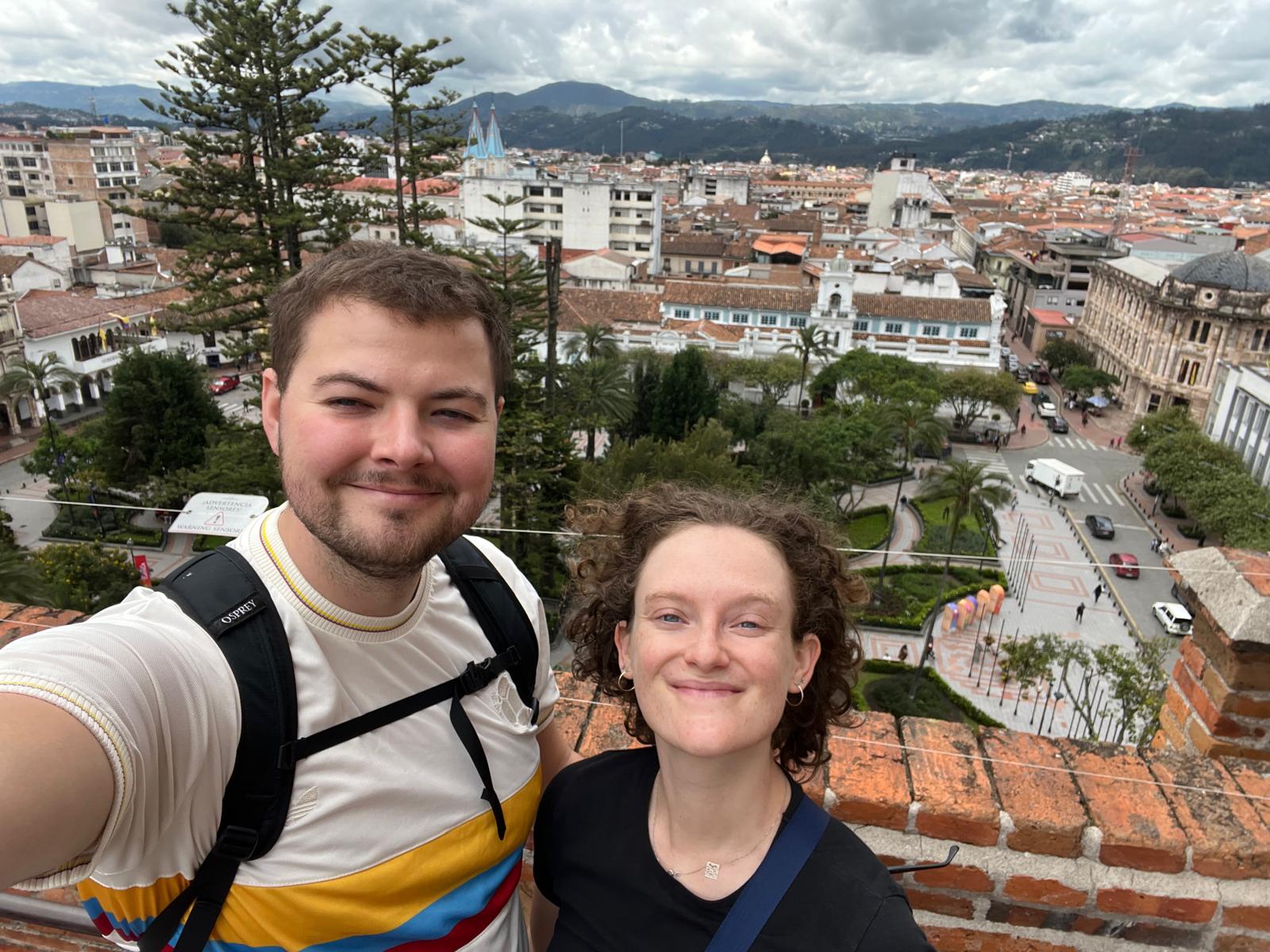
There was no one thing in Cuenca – we had a great time walking around the city, visiting a few museums and ascending the church tower.
The town:
On the first day – post night bus, post thievery – we pushed ourselves and dove straight into a walking tour. The group was us and a Canadian couple and we were led by a funny Law student around the city. We learnt how Cuencans traditionally love Europe, are quite conservative, and are proud of their very pretty city. We saw traditional food markets and the famous flower market where they sell Pitimas water – a bright red drink that will take away all your troubles.
The main square, Plaza Calderon, was beautiful and had both the original small old cathedral and the newer, grand one. The red marble and blue domes make it different to most churches we’ve seen and climbing up the tower wasn’t too scary – although we also learned the cathedral is technically incomplete due to structural unsoundness and large cracks appearing….
The museums:
On our museum day, we just nipped over the road. We were aiming for the Pumapungo museum, but first were drawn into the money museum by an enthusiastic security guard. I took some photos of the old sucres for Dad and then the best bit was obviously the make your own bank note station. We weren’t great at following the instructions, however, so not our best work.
The Pumapungo museum next door had a range of historic and modern Ecuadorean art, and I could mostly follow along the information until all the descriptions that were first in Spanish and English became Spanish and Portuguese – that got a bit trickier.
Then, last but not least, the hat museum! Chris was keen to see how the Panama hat is made – you might think that’s an activity to do in Panama, but you’d be wrong because they’re actually from Ecuador. We saw weaving and hat presses and to be honest there’s not a huge amount more to it, but it was a fun little museum with, you guessed it, a huge hat shop.
Bonus:
Discovering just about every shop in Cuenca that looked like it might sell a fleece, a kindle, or padlocks. A great way to learn some new Spanish vocab too!
Next up we cross the border into Peru – thank you Ecuador!